
If you are in Canada/are Canadians, by now, you would be familiar with this story: https://www.smithsonianmag.com/smart-news/751-unmarked-graves-discovered-near-former-indigenous-school-canada-180978064/
There are no hot takes here (well, aside from the racist ones, thanks, National Post). But there are calmer, nuanced take that I have seen, such as this https://www.linkedin.com/feed/update/urn:li:activity:6815509761619062784/
I’ve reflected a lot (and discussed a lot with people on both ends of the spectrum). But as an immigrant to Canada, I want to offer a deeply personal, deeply emotional take on the issue.
Can we still celebrate Canada, and Canada day, knowing this land not only offers opportunity, equality, and prosperity for people like me while burying and excluding the people who were here first?
Let me start from recent history, my history. 2 of my uncles are Boat people. They fled Vietnam, back then a country post-war. My grandfather went to re-education camp. My mother was barred from university. My father was not allowed promotion in his job (he works for the communist in public train) because he married my mother. At least that’s what my mother believed. My grandparents believed it wasn’t safe for my uncles to be in Vietnam. One of my uncles got caught trying to flee the country as a refugee. He was in jail.
Growing up, I would hear stories, saw pictures from my uncles. I imagined Canada to be of mountains, of rivers, of lakes, and of beautiful people, people who helped 2 young immigrant men, one of them teenager, to survive brutal Quebec winters, and supporting them to learn French, and allowing them jobs and careers and beautiful families and lives.
In 2006, when I first visited Canada, Montreal, back then, I was just a 21-year-old young man, deeply, deeply in the closet. My uncle took me downtown, and I saw 2 men holding hands. They kissed. And at that moment, I realized, Canada is more than just endless mountains, boundless rivers and lakes, and kind beautiful people. Canada means I can live my truth.
I made the mistake of making the assumption Canada was perfect.
And I moved here in 2012. Stephen Harper was the Prime Minister. I fell in love with a (hot), public policy-obsessed, stubborn, argumentative Conservatives. In order to impress him, I started to read the news. In order to have intelligent conversations with him, I started to read history books and analysis. And I started to form opinions. And I started to unearth dark, horrible horrible truths, about Canada.
Of course, I can always take the easy way out of this, like many immigrants. “I wasn’t here.” “My ancestors didn’t do this.” “Hey, I’m oppressed too, you know.” But the day I stood in front of the maple leaf flag, swearing allegiance to the Queen, and willingly wishing to be a Canadian, I inherited all these wrongs that have been done, all these traumas that we as a nation have inflicted, to the very people who have been here first. I don’t need to have a degree in history or political science to dance around all this technicality of words to call all these injustices what they were: genocide, kidnapping, murder, broken contract and treaties, systemic incarceration, and systemic discrimination.
And let’s start with “It’s utterly shameful and totally unacceptable.”
I don’t need to be Indigenous to grieve and fight for the rights of our Indigenous Canadians who are still at a disadvantage and fighting injustices today. I don’t need to be a parent to be outraged at recovered children’s corpses. I don’t need to experience injustices to fight injustices. Far from it. The privilege to not suffer demands more responsibility to fight suffering in others.
It is easy for me, as a newcomer, to know that I am a guest on this land. It is easy for me, as a person who didn’t have the baggage of a “settler” guilt and white guilt, to pass on the mic to the people who need it.
So, where do we go from here? Can we still celebrate Canada? Can we still love Canada?
Loving a nation is like loving a person. Loving a nation is accepting that a nation is a collective of myths, of identities, of histories. Loving a nation is loving it in all of its triumphs, all of its flaws, and all of its darkness. Loving a nation is desiring to make it a better place, for all, for the people who were here first.
Loving Canada is loving the people who were here first, long before Canada was Canada, and in all their suffering and all their loss and all their grief, allow us to share and flourish on the land that their children were buried, hidden from them.
It’s ok to love and grieve in the same deep breath.
It’s ok to look forward, as long as we know our foot walk on the same earth the children were buried, and swear the same old tragedies, the same old hates, the same old rhetorics, are never repeated.
It’s ok to celebrate, as long as we know there is always darkness in every morning, and there is light in every dark sky preserve, and that our fellow Indigenous friends, family, coworkers, and even strangers, need us to amplify their voices, their truth, their trauma, respectfully and carefully.
As an immigrant, I will never have the same deep love Indigenous people have for the land. But as an immigrant, I know and I appreciate and I celebrate the people, the culture, and I want to hold and hold and hold all the trauma that they have suffered.
Because, once again, the Indigenous people were here first.
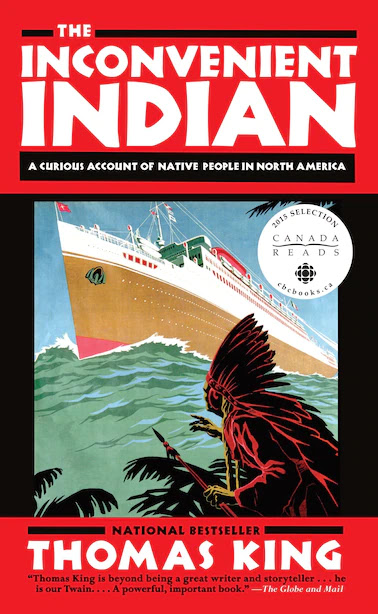
P.S: If you haven’t read it, I highly recommended this book:
 Pace Fine Arts